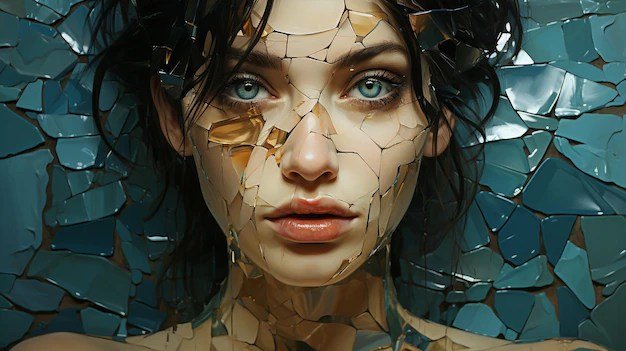
We often chase the impossible ideal: flawless art. In the realm of game art, with its ever-advancing engines and photorealistic ambitions, the pursuit of pixel-perfect fidelity can feel like the ultimate goal. Yet, what if the true magic, the profound emotional connection, isn't found in the pristine but in the profoundly human? This is the core of The Role of Human Imperfection & Intent in Game Art, a fascinating, often overlooked dimension that artists can leverage to create experiences that truly resonate. It's about moving beyond mere technical excellence to embrace the deliberate wobble, the nuanced stroke, the subtle "mistake" that whispers a story far deeper than any perfectly rendered surface.
At a Glance: Why Imperfection Is Your Secret Weapon
- Authenticity Wins: Flaws humanize your art, making it relatable and genuine.
- Emotional Depth: Imperfections can evoke stronger feelings than polished perfection.
- Unique Voice: They showcase the artist's hand, fostering individuality.
- Growth Accelerator: Mistakes aren't failures; they're opportunities for innovation and learning.
- Challenge Perfectionism: Break free from unrealistic standards that stifle creativity.
The Myth of Flawless Creation: Why Perfectionism Hurts Art
For generations, art education, and often our own inner critics, have hammered home the idea that "good" art is "perfect" art. Every line precise, every color true, every form unblemished. In digital art, this pursuit can become obsessive. Software offers tools to undo, refine, and smooth until every trace of the human hand is erased. But this relentless drive for perfection, while achieving technical mastery, often strips the art of its soul.
Perfectionism sets an unattainable standard, creating a vicious cycle of self-doubt and endless revision. It starves spontaneity, stifles experimentation, and ultimately robs the artist of joy. It's like polishing a beautiful gemstone until all its natural inclusions – its unique fingerprint – are gone, leaving behind something smooth but ultimately generic. This isn't to say technical skill is irrelevant; it's foundational. But true artistry transcends mere execution. It's about what you choose to show, and how you choose to show it, even when "how" involves a deliberate deviation from the perfect.
The Human Touch: Why Imperfection Resonates So Deeply
Think about your favorite games. Is it always the most graphically advanced that stick with you, or is it often those with a distinct style, a peculiar charm, or even a deliberate roughness that feels incredibly real? Imperfections are the echoes of the artist's hand, the visible journey of creation. They signal vulnerability, acknowledging that art, like life, is messy, complex, and beautiful precisely because of its flaws.
When you see a subtly asymmetrical character model, a brushstroke that's a little too bold, or an environment detail that's slightly askew, you're not just looking at pixels; you're seeing a choice. You're sensing the artist behind the screen, their decision-making, their unique way of interpreting the world. This "human touch" fosters a profound connection, making the art more relatable and authentic. It speaks to our own imperfections, our own journeys, creating a bridge between creator and audience that polished perfection often struggles to build.
Wabi-Sabi and Glitch Art: Intentional Imperfection Across Mediums
The concept of celebrating imperfection isn't new. Ancient philosophies and modern movements alike have found profound beauty in the non-perfect.
Wabi-Sabi: Finding Beauty in the Transient
Perhaps the most renowned philosophy is Wabi-Sabi, a Japanese aesthetic that reveres the beauty found in impermanence, imperfection, and incompleteness. It's about finding grace in natural wear, the subtle crack in a cherished tea bowl, or the uneven patina of an antique. In art, adopting a Wabi-Sabi mindset means appreciating the natural evolution of your work, allowing for spontaneous elements, irregularities, and those delightful "happy accidents." It encourages artists to resist the urge to over-polish, finding the perfect moment to stop, to let the character of the material or the process shine through. Imagine a game environment where the textures aren't uniformly perfect but show subtle signs of age, wear, or organic growth – that's Wabi-Sabi at play, lending authenticity and depth.
Glitch Art: Embracing Digital "Mistakes"
On the opposite end of the spectrum, yet equally illustrative, is Glitch Art. This digital art form intentionally embraces errors, corruptions, and "glitches" in digital data to create aesthetically compelling images, videos, or even interactive experiences. It's a defiant act against the pristine, sterile perfection that computers often strive for. Glitch artists might deliberately corrupt image files, manipulate code, or exploit software bugs to generate visual noise, pixel distortions, or unexpected patterns.
In game art, while full-blown glitch art might be too disruptive for gameplay, the principles can be incredibly powerful. Think of a game using intentional visual artifacts to represent a damaged character's perspective, a corrupted digital world, or a moment of intense psychological distress. The deliberate "error" communicates emotion and narrative in a way that perfect rendering simply cannot. It's a testament to the idea that intent transforms a mistake into a meaningful artistic choice.
The Emotional Punch of the "Almost Right"
Why do imperfections evoke strong emotional responses? Because they're real. Life isn't a perfectly airbrushed photograph; it's full of jagged edges, unexpected detours, and rough patches. When art reflects this complexity, it resonates on a deeper level.
- Vulnerability: A visible struggle in a painting's brushwork, or a subtly uneven texture in a 3D model, can convey the artist's own vulnerability and effort. This makes the art feel more human, more accessible.
- Narrative: Imperfections can hint at a backstory. A chipped statue, a faded mural, a dented piece of armor – these aren't just aesthetic choices; they tell a tale of time, conflict, or neglect without a single word.
- Individuality: Every artist has a unique "hand." Imperfections are part of that signature. They prevent art from feeling mass-produced or AI-generated, fostering a sense of unique craftsmanship. This is particularly relevant in a world where we're increasingly grappling with the distinction between human and machine-generated creativity, as explored in discussions like Pizza Tower vs. AI Explained. The human touch, including its "flaws," becomes a hallmark of authentic creation.
- Challenging Standards: By embracing imperfections, artists subtly challenge conventional beauty standards that often promote an unrealistic ideal. They celebrate variety, character, and the rich tapestry of what it means to be alive.
Mistakes as Milestones: Fueling Growth & Discovery
The most transformative lesson for any artist is to reframe "mistakes" not as failures, but as invaluable opportunities for growth. Every unexpected outcome, every technique that doesn't quite work as planned, is a potential doorway to a new style, a fresh approach, or an unforeseen discovery.
- Experimentation: A willingness to "fail" is essential for true experimentation. If you're always aiming for a perfect outcome, you'll rarely step outside your comfort zone.
- Creative Problem-Solving: When an unexpected issue arises, it forces you to think differently, to adapt, to innovate. This process builds resilience and expands your creative toolkit.
- Developing New Techniques: Many artistic styles and techniques were born from an initial "mistake" that, upon reflection, was found to possess a unique charm or expressive power. Consider the happy accident that leads to a new way of rendering light or texturing a surface.
- Artistic Evolution: An artist's journey is not a straight line but a winding path of trial and error. Embracing this journey, including its perceived missteps, is crucial for continuous artistic evolution and finding your unique voice.
Vincent van Gogh, a titan of art history, perfectly encapsulates this philosophy.
Learning from a Master: Vincent van Gogh's Imperfect Brilliance
Van Gogh, often misunderstood in his time, stands as a towering example of an artist who embraced and even celebrated imperfection. His work defies conventional notions of perfection in favor of raw, visceral expression.
- Individuality Through Style: Van Gogh's distinctive, often impasto brushwork wasn't about rendering objects with photographic accuracy; it was about conveying feeling. Each swirling stroke, each thick dab of paint, is an "imperfection" in the classical sense, yet it's precisely what makes his work so uniquely his own. It’s an undeniable signature of the human hand at work.
- Bold Use of Color: He didn't shy away from vibrant, sometimes clashing colors that weren't always "true to life." These bold choices, often seen as unconventional or even "wrong" by his contemporaries, imbued his paintings with incredible emotional intensity.
- Finding Beauty in the Mundane: From simple sunflowers to humble potato eaters, Van Gogh found profound beauty in ordinary subjects. His expressive strokes elevated the everyday, suggesting that even the simplest things, rendered with feeling, possess immense power.
- Emotional Honesty: His art is a powerful testament to the full spectrum of human emotion, including despair and struggle. He didn't mask the darker aspects of the human experience but brought them to the surface with unflinching honesty. This vulnerability, conveyed through his unique, imperfect style, connects deeply with viewers.
- Persistence and Resilience: Despite immense personal challenges and lack of recognition during his lifetime, Van Gogh continued to create, learning and evolving with every stroke. His persistence in the face of perceived "failures" ultimately led to a body of work that profoundly changed art history.
Van Gogh teaches us that the goal isn't to be flawless, but to be authentic; not to render perfectly, but to express powerfully.
Your Toolkit for Embracing the Imperfect in Game Art
Ready to challenge the tyrant of perfectionism and unlock new creative potential? Here's how you can actively cultivate an appreciation for human imperfection and intent in your game art workflow:
Reframing Your Creative Mindset
- Challenge Conventional Perfection: Consciously reframe "flaws" as unique characteristics or opportunities. Instead of seeing a mistake, ask yourself: "What if this was intentional? What emotion or story could it tell?"
- Embrace the Creative Process: Allow for spontaneity. Don't plan every single pixel. Let your hand, your mouse, or your tablet guide you to unexpected places. Those "happy accidents" are often where true magic lies.
- Adopt a Wabi-Sabi Mindset: Look for beauty in the transient, the asymmetrical, the slightly worn. Can you integrate subtle signs of age, use, or organic variation into your textures, models, or environments?
- View Mistakes as Opportunities: When something doesn't go as planned, pause. Instead of deleting or undoing, explore it. Can this "error" be the seed for a new technique, a fresh style, or an unexpected narrative element?
- Experiment Freely: Dedicate time specifically for experimentation without the pressure of a perfect outcome. Play with tools, break rules, see what happens when you push boundaries.
Practical Studio Habits
- Practice Reflection and Seek Feedback: Step away from your work. When you return, view it with fresh eyes. What feels authentic? What tells a story? Solicit constructive criticism, but specifically ask for feedback on elements that feel "imperfect" – do they resonate or distract?
- Keep an Art Journal/Sketchbook: Document your artistic journey. Include not just your successes, but also your perceived failures, experiments that didn't work, and the lessons learned. This visual diary is a powerful tool for growth.
- Cultivate Persistence: Understand that mastery is a marathon, not a sprint. Mistakes are an inherent, vital part of the learning process. Keep going, keep creating.
- Study Other Artists' Work: Pay attention to how master artists, both traditional and digital, incorporate "imperfections." Notice a sculptor's visible tool marks, a painter's rough textures, or a game artist's stylized character quirks.
- Stay Open-Minded and Adaptable: Be receptive to unexpected outcomes. Sometimes, the most interesting results emerge when you let go of rigid control and allow the artwork to evolve organically.
Nurturing Your Well-being
- Trust the Artistic Process: Let go of the need for absolute control. Art has a way of guiding itself if you allow it.
- Set Realistic Expectations: Focus on continuous progress and growth rather than chasing an unattainable, static ideal of perfection. Every piece doesn't have to be a masterpiece.
- Practice Self-Compassion: Be kind to yourself. Mistakes are a normal, even essential, part of learning and creating. Treat your creative self with the same understanding you'd offer a friend.
- Set Limits and Boundaries: Avoid endless revisions. At some point, a piece is "done." Learn to identify that point and step away, even if minor "imperfections" remain. Obsessing over tiny details often diminishes the overall impact.
- Practice Mindfulness: Stay present and focused during your creative process. Mindfulness can reduce anxiety and perfectionist tendencies, allowing for a more fluid and enjoyable experience.
- Challenge Negative Thoughts: Actively replace self-limiting beliefs ("This isn't good enough," "It's not perfect") with positive, empowering affirmations ("This is part of my unique style," "I'm learning and growing").
- Seek Support: Engage with supportive friends, family, or artistic communities. Share your struggles and successes. Sometimes, an outside perspective can help you see the beauty in your "flaws."
- Celebrate Imperfection: Embrace it as a source of freedom, creativity, and unique character in your art. This shift in perspective can be the most liberating act of all.
Common Myths About Imperfection in Art
Let's debunk a few persistent misconceptions:
"Embracing imperfection means sloppy work."
Absolutely not. Embracing imperfection is a deliberate artistic choice, not an excuse for laziness or lack of skill. It requires just as much, if not more, intent and understanding to create a compelling "imperfect" piece as it does a polished one. The goal isn't sloppiness, but thoughtful imperfection.
"Only skilled artists can afford to be imperfect."
This is a harmful myth. Artists at all stages of their journey benefit from embracing imperfection. Beginners can learn faster by not obsessing over initial mistakes, and seasoned pros use it to push boundaries. It's a mindset, not a skill level prerequisite.
"My audience won't appreciate flaws; they want perfection."
While some audiences might initially gravitate towards highly polished visuals, many crave authenticity and emotional depth. A genuinely imperfect piece, infused with intent and character, often connects more powerfully than something sterile and generic. The right "flaw" can be a memorable signature.
"Imperfection makes my art look amateurish."
Again, it's about intent. A random mistake might look amateurish. A deliberate choice to include an imperfection, integrated thoughtfully into the overall aesthetic, can elevate a piece, giving it character, uniqueness, and artistic weight. It's the difference between a child's crayon drawing and a master's expressive sketch – both are "imperfect," but one has profound artistic intent.
Beyond the Pixels: Designing for Human Connection
In the rapidly evolving landscape of game development, where tools become more powerful and accessible by the day, the role of human imperfection and intent becomes even more crucial. As AI-generated content becomes increasingly sophisticated, the unique fingerprint of a human artist – with all its glorious "flaws" – will be the distinguishing factor. It's the nuance, the unexpected twist, the emotional resonance born from an artist's personal journey that machines struggle to replicate authentically.
By deliberately choosing to leave a visible trace of your hand, by embracing the beautiful accident, and by allowing your unique perspective to manifest without the constraints of an artificial ideal, you don't just create art; you create a conversation. You build worlds that feel lived-in, characters that breathe, and experiences that resonate not just visually, but deep within the human heart.
So, the next time you find yourself staring at a perceived flaw in your game art, don't rush to erase it. Pause. Consider its story. Ask what emotion it might evoke. You might just discover that your greatest strength lies not in achieving perfection, but in courageously revealing your perfectly imperfect human touch.